| Home | |
| Faculty | |
| Graduate Program | Events and Seminars |
| Resources | |
| Contact Us | |
|
C H A I R L E T T E R
Dear colleagues, friends, trainees: The Department of Physiology and Cellular Bio¬physics at Columbia University College of Physi¬cians & Surgeons is a vibrant, accomplished department that provides the most exciting environment for cutting edge science. The department is the oldest Physiology Department in the country established in 1767 as part of King’s College the original name of Columbia University. The mission of the department is: Biomedical Research offers a lifetime opportunity to invest one’s energies and intellect in advancing understanding of living matter, to follow one’s own creative instincts, and to work at the frontier of human knowledge for the benefit of all mankind.
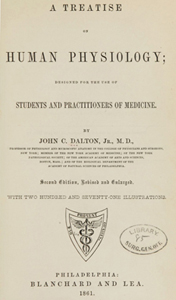
2) commitment to excellence in research with a focus on innovation 3) commitment to teamwork, caring and supportive workplace We are proud that the department has fully mobilized it’s considerable expertise to understand and overcome the COVID-19 pandemic. These efforts include development of the serological assay for SARS-CoV-2 now used for clinical testing by the medical center. Elucidation of. The ion channel properties of the E-protein and screening for channel blockers as potential therapeutics. Novel therapeutics for heart, brain and lung disorders associated with COVID-19, development of therapeutic peptides that can be inhaled and block viral replication, development of nanobodies to neutralize the virus, solving the structure of viral proteins, establishing an FDA approved nucleic acid test. Previous chairs have been among the most famous physiologists in US history including John C. Dalton 1825-1889 (insert picture here from portrait in the elevator lobby) who wrote the most important physiology textbook of his age and was elected as a Fellow of the American Academy of Arts and Sciences in 1864.
“A treatise on human physiology: designed for the use of students and practitioners of medicine”
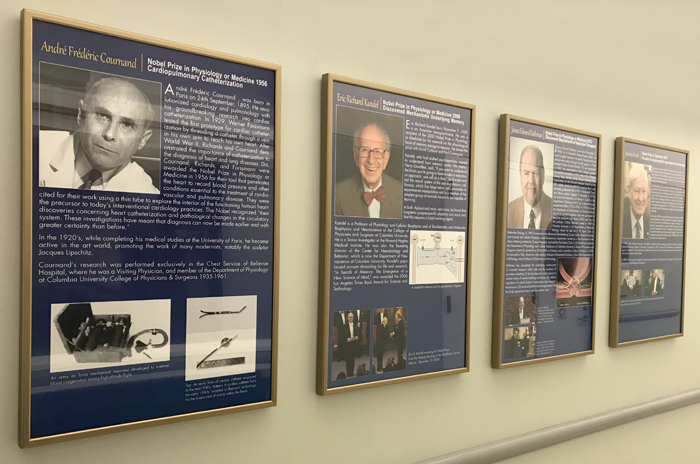
Our faculty are leaders in the exploration of the heart, lungs, bone, ion channels, structural biology of membrane proteins including cryo-EM, mitochondria, skeletal muscle, metabolism, epigenetics, virology, and many other areas. At our annual departmental retreat trainees present their work and discuss science and their career plans with the faculty in an informal setting followed by an evening of relaxation and dancing. This year featured a guest lecture about the re-opening of the Museum of Modern Art (MoMA) by curator Ann Temkin. Our distinguished faculty include two Nobel Laureates (Eric Kandel and Jim Rothman, adjunct), and six members of the National Academy of Sci¬ences, Eric Kandel, Arthur Karlin, Wayne Hendrickson, Larry Abbott, Jim Rothman (adjunct) and Andrew Marks. The Department also includes our members of the National Academy of Medicine, Eric Kandel, Sam Silverstein, Jim Rothman, and Andrew R. Marks; and five members of the American Academy of Arts and Sciences, Eric Kandel, Sam Silverstein, Qais Al-Awqati, Jim Rothman and Andrew Marks. Major areas of research in the Department include: membrane biology (Andrew Marks, Filippo Mancia, Jonathan Javitch, Arthur Karlin, Qais Al-Awqati); bone biology (Stavroula Kousteni); pulmonary biology, COPD, asthma (Jeanine D’Armiento, Jahar Battacharya); metabolism and mitochondria (Edward Owusu-Ansah, Stavroula Kousteni), ion channel biophysics (Manu Ben Johny, Henry Colefcraft, Andrew Marks, Wayne Hendrickson, Arthur Karlin); epigenetics (Shawn Liu); cardiovascular biology, heart failure, cardiac arrhythmias, atherosclerosis [Andrew Marks, Henry Colecraft (Vice Chair of the Department), Ira Tabas]; biology of the immune system (Sam Silverstein, emeritus); skeletal muscle biology and muscular dystrophies (Andrew Marks); structural biology (Wayne Hendrickson, Oliver Clarke and Filippo Mancia); virology (Anne Moscona and Matteo Porotto) computational/systems biology (Larry Abbott, Ning Qian); developmental neurobiology & neuroscience (Jane Dodd, Vice Chair of the Department, Eric Kandel, Joseph Gogos, Ning Qian, Larry Abbott, and Wes Grueber). Summaries of the faculty research and selected publications can be found under “Faculty Profiles”. The outstanding graduate training program headed by Jane Dodd and Filippo Mancia is funded by an NIH training grant (T32). The faculty provide a rich environment for training and applications for the graduate program are invited from outstanding students (see “Graduate Program” and postdoctoral fellows (see “Positions Available” and contact individual faculty). In addition several searches are ongoing for new faculty (see “Positions Available”). We are particularly interested and enthusiastic about seeking diversity amongst our trainees and faculty. Faculty in the Department are most proud of recent successes in our ongoing efforts to learn about and eventually overcome diseases that afflict millions of patients. These accomplishments are summarized on our web site (see “Recent Research News”) and include advances in understanding the molecular basis of schizophrenia, development of the nervous system that is relevant to treatment of spinal chord injury, and new treatments for heart disease includ¬ing coronary artery stent restenosis, heart failure and cardiac arrhythmias. The Department has many opportunities to provide critical support for the ongoing research efforts in these and other areas. Interested donors should contact me directly.
|